

 Analysis by Gamescozy
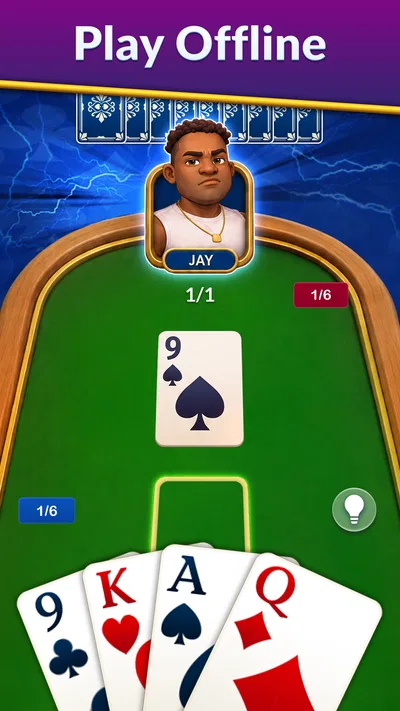
Spades is at its best when I want a familiar card game that still asks me to pay attention. This version, Spades - Classic Cards, keeps the appeal in the decisions: judging how many tricks I can take, choosing when to lead a spade, and adapting when a hand goes differently from plan. It is a focused option for a quick mental workout, rather than a broad collection of card games or a social platform built around long sessions.
A traditional game built around judgment
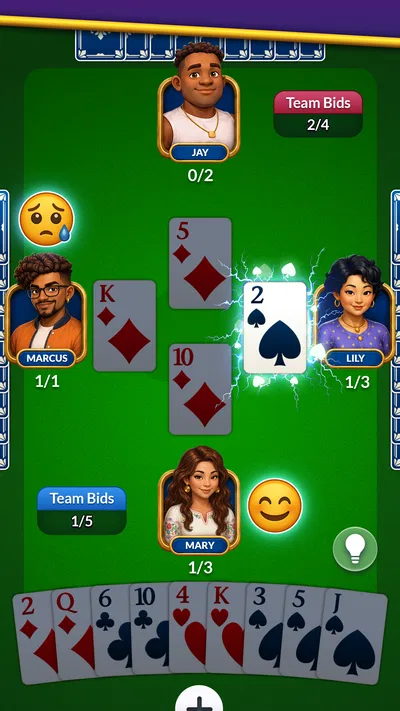
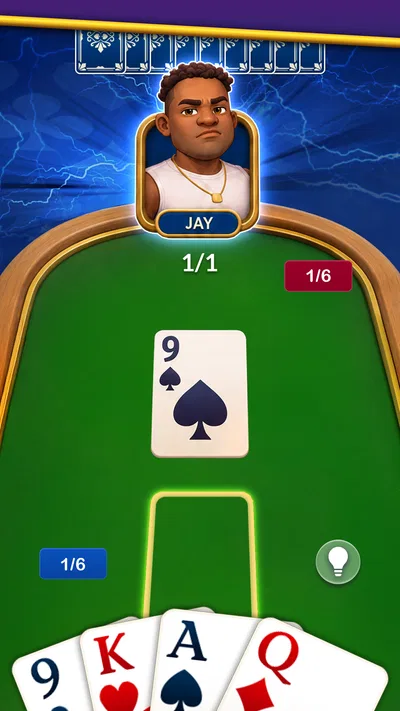
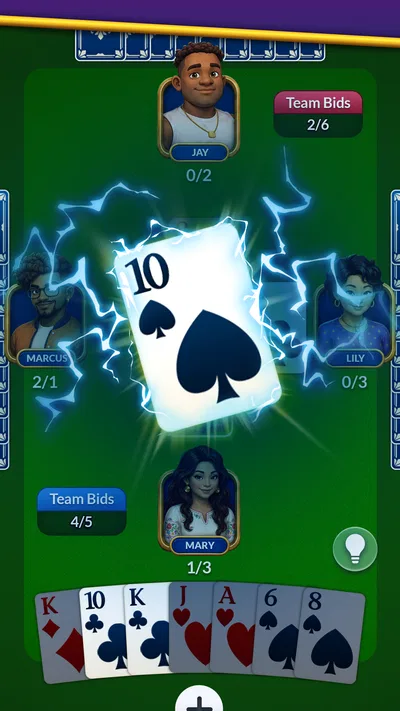
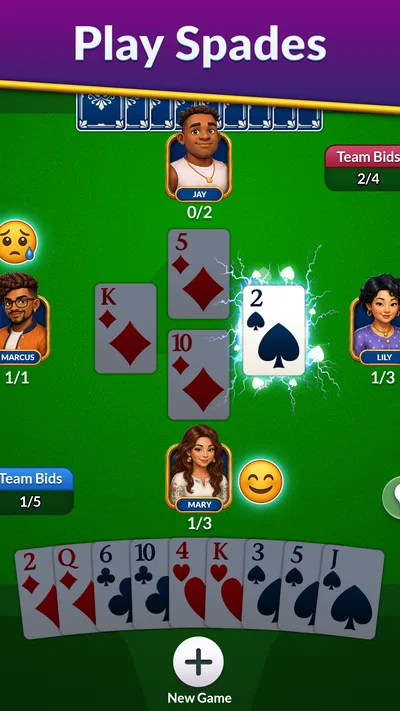
The basic pleasure of Spades is its balance between prediction and recovery. Before play, each player estimates how many tricks their hand can win; during the hand, every card reveals something about the table. A strong-looking hand can still go wrong if I overbid, while a modest one may have a useful path if I pay attention to what has already been played. That push and pull gives the game more staying power than simply matching cards or chasing a high score.
Tripledot Studios Limited publishes this card game, which is free to download and aimed at Everyone. Its average rating is 4.8 from around 53,000 ratings, and it has passed one million installs. Those figures suggest broad appeal, but the important question for me is whether the familiar rules remain enjoyable after the novelty wears off. They do, provided you like thinking several plays ahead and accept that luck in the deal is part of the experience.
The app is a good fit for brief, self-contained play. A hand gives me a natural stopping point, so I can open it while waiting for an appointment or take a short break without needing to commit to a long campaign. Spades also rewards attention in a way that makes a few quiet minutes feel more engaging than tapping through a purely automatic puzzle.
Where the decisions matter
The most useful habit I bring to each hand is to treat bidding as a promise, not a guess at how many cards look powerful. I consider likely winners, but I also think about how the hand might change once trump cards are used. That distinction matters: a high card can take a trick early, yet the same suit may become vulnerable later. The game is most satisfying when I use the bid to set a realistic target and then adjust my play to meet it.
A practical tip is to keep track of which suits opponents can no longer follow. When a player is void in a suit, a spade may become an immediate threat even if it was not the strongest card at the start. I find that remembering this is more valuable than trying to memorize every card. It gives me a simple, manageable signal for when to protect a winning card or avoid leading a suit that could be trumped.
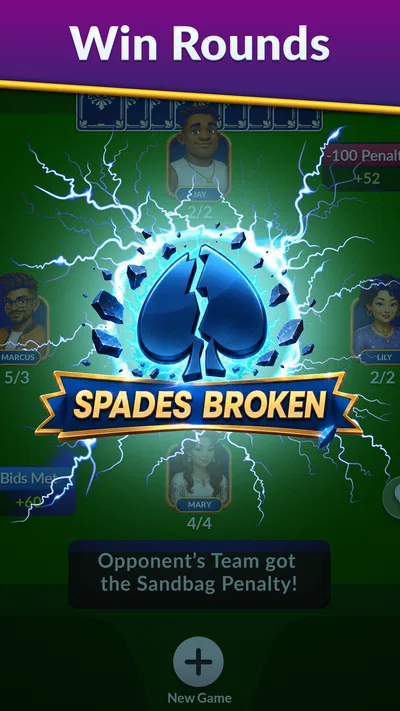
Another useful approach is to distinguish between a trick I can win and one I should win. If I have already met my bid, taking an extra trick may not help, depending on the scoring rules in use. Conversely, if I am short, preserving a likely winner for later can be smarter than spending it to take an early trick. This is where a straightforward digital game can still feel thoughtful: the challenge comes from timing and restraint, not from complicated controls.
In everyday use, I would open it after finishing a small task rather than while trying to multitask. A phone notification or an interruption can make it harder to remember which suits have been exhausted and how many tricks remain. If I play with a clear head, the rounds feel brisk and satisfying; if I am distracted, the same hand can turn into a string of avoidable mistakes. That makes it a better break-time choice than something to run in the background.
What it does well—and where it can feel limited
The strongest quality is the focus. Spades does not need a complicated theme to make a hand interesting, and the familiar structure lets me concentrate on the cards rather than learning a large set of systems. That makes it approachable for someone returning to the game after years away, while still leaving room to sharpen bidding and card-counting habits over time.
The trade-off is that this narrow focus will not suit everyone. If you want a changing sequence of missions, a wide range of game modes, or a story to follow, a dedicated Spades app may feel repetitive. The pleasure here depends on liking the core rules enough to replay them. Even a well-played hand can feel routine if you are looking for constant surprises rather than small strategic choices.
There is also a difference between playing cards on a phone and sitting around a table. In-person Spades brings conversation, partner signals and social tension that a digital version cannot replace. I would choose a physical deck for a lively evening with friends, especially when the group enjoys banter as much as the game. This app is more convenient when nobody else is available or I only have time for a quick round.
It is worth considering the purchase model before settling in. The game is free, with in-app purchases ranging from $0.99 to $99.99 per item. I would treat paid options as optional spending rather than a reason to expect a different kind of card game; the central appeal remains the hand-to-hand strategy. If you prefer apps with no in-app purchase choices at all, this may not be your ideal pick, even if you never plan to buy anything.
The listed current version is 1.16.00, and the minimum operating-system requirement is 7.1. That makes compatibility worth checking before installing on an older device. The game’s age rating is Everyone, so it is broadly suitable from a content standpoint, though younger players may still need help understanding bids and trick-taking strategy.
Who will get the most from it
I would recommend it to people who already know Spades, enjoy learning through repeated hands, or want a compact way to practice thinking about bids. It can also work for a newcomer willing to learn at a patient pace: the rules are easier to absorb when you focus on one question at a time, such as whether your hand can reliably take a certain number of tricks. Starting with cautious bids is a better learning strategy than trying to win every hand outright.
For experienced players, the best use is deliberate practice rather than expecting a substitute for a club night. Pick one skill to work on during a session: avoid leading a suit that gives opponents a chance to trump, or notice when a partner’s play suggests they need help reaching their bid. A narrow focus makes improvement easier to recognize than simply judging a session by wins and losses, which can be affected by the deal.
I would steer away anyone who dislikes card games with uncertain outcomes or who wants every round to reward aggressive play. Sometimes the sensible decision is defensive, and sometimes a carefully planned hand still falls short because the cards do not cooperate. Players who prefer fast action, elaborate progression, or direct social interaction will likely be happier with a different genre or a face-to-face game.
A useful alternative to a deck of cards, not a replacement for every table
Compared with casual matching games, Spades asks for more memory and cooperation-minded judgment. Compared with other trick-taking card apps, its appeal is the familiar bidding challenge rather than novelty. That simplicity is a strength when I want to get straight into a hand, but it also means the game has to earn repeat visits through the quality of its core play. If the rules themselves are what I enjoy, that is enough; if I need variety layered on top, it is not.
One small but important expectation to set is that a good session is not necessarily a winning session. I judge my play by whether my bid was reasonable and whether I used the cards with a plan, not only by the final result. That keeps the game enjoyable even when a hand turns against me and helps prevent the common mistake of increasing bids just to chase a recent loss.
My overall view is that Spades - Classic Cards is a sensible choice for anyone who wants the classic trick-taking game in a convenient mobile format. Its appeal is strongest in short, focused sessions and in the chance to improve through small decisions: bidding carefully, tracking void suits, and saving winners for the right moment. It is less compelling for players who need extensive variety or the warmth of a real table, and its optional purchases may put off people who prefer a completely purchase-free app.
If you enjoy Spades on its own terms, I think this is worth trying. I would start with conservative bids, pay attention to which suits opponents can no longer follow, and give yourself a few hands before deciding whether the rhythm clicks. For a quick card break with genuine choices, it earns a place on my phone; for a social gathering or a constantly changing game experience, I would reach for something else.